The Hair Presentation Atlas
See clearly what is changing.
A calm reference for what hair looks like when it changes: a widening part, a thinner ponytail, a crown you only notice in photographs. And how to record it fairly.
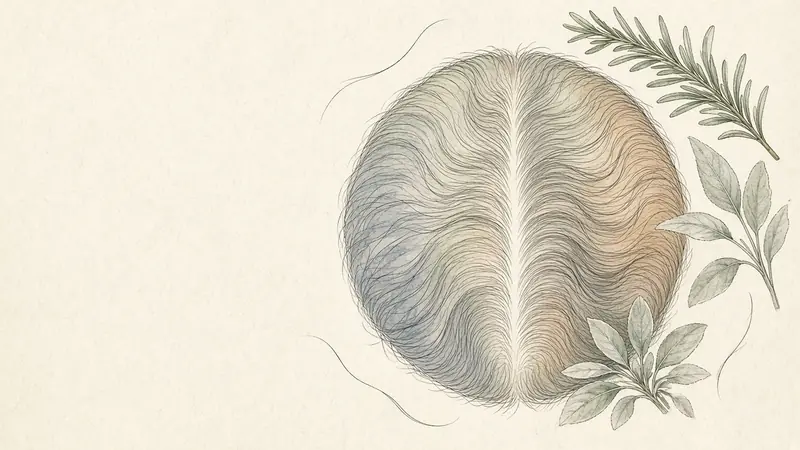
Most hair sites start with a diagnosis, a product, or a type. People do not start there. They start with a view in the mirror or a photograph that looks different from last year, and they ask a simpler question: what am I actually seeing?
Capellum is built around that question. Each presentation, from a widening midline part to a Christmas-tree pattern, thinning at the crown, temples that have moved back, a change that is all over, or a ponytail that feels smaller, gets its own page, with its own illustration. Each page explains how that view is described in the literature, what it is easily confused with, and how to photograph it so the next picture is comparable. It does not tell you which condition you have. Timelines of shedding after a birth, a medicine or an illness live in the Shed Clock on Hair Experts.
Start with what you see
Twelve views people actually bring to a mirror, each with a fair way to photograph it and a list of lookalikes.
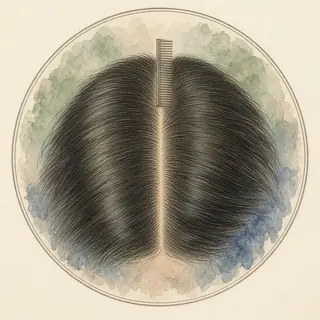
A widening part
A slow broadening of the line you comb.
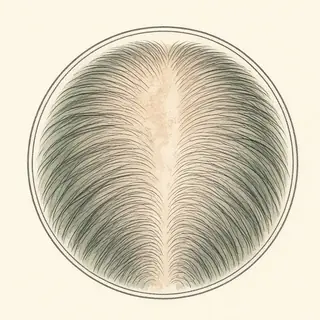
The Christmas tree
Widest at the front of the part.
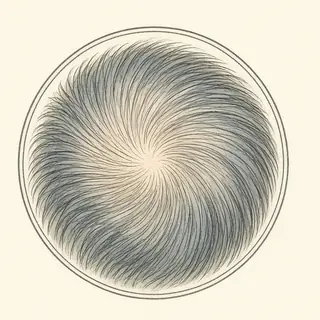
The crown
The view you rarely see yourself.
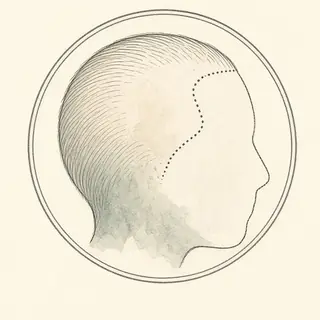
The temples
Corners moving back, sometimes in women too.
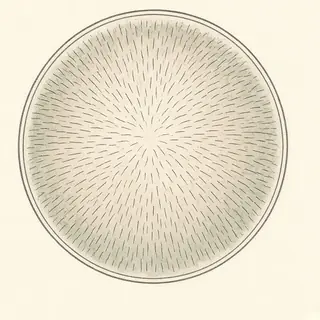
All over
Even thinning, often after an event.
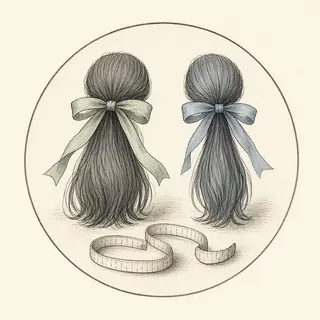
A smaller ponytail
A baseline that mixes several measures.
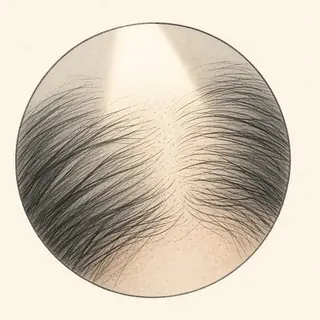
Visible scalp
Color, curl and light all play a part.
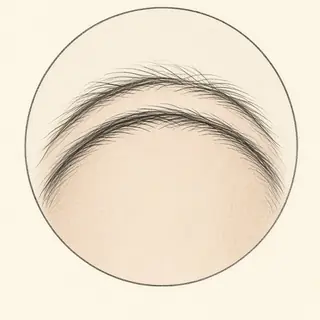
A changing hairline
Maturing, receding or pulled.
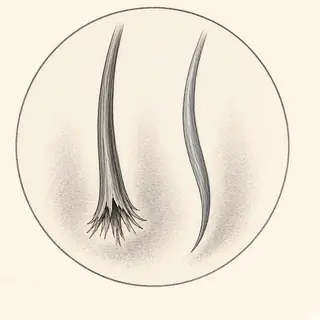
Broken or thinning?
Snapped ends versus finer regrowth.
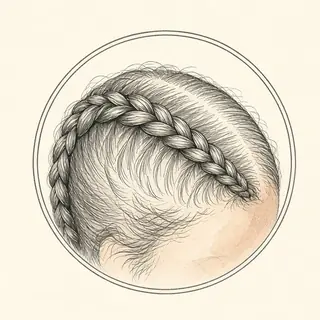
The edges
When a tight style leaves a trace.
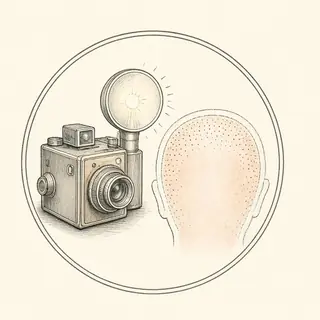
In photos
Flash and lenses can invent a change.
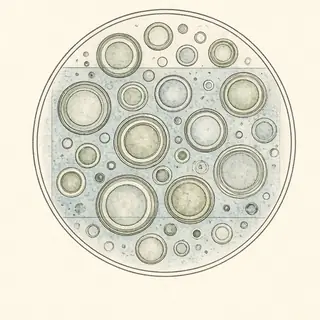
Finer hairs
Thick and thin hairs side by side.
Every presentation in the atlas, including light, wet, greasy, curly and blonde hair
The Capellum quiz
Not sure which picture is yours?
Five one-tap questions about where you notice the change, how it arrived and what the short hairs look like. You get a gentle reading, the page to read next, and one suggested first step. Nothing is stored, and safety signs always point you to a professional first.

01 · See
What you might be seeing
A geography of change: parts, crowns, temples, edges, lengths, and the lights and photographs that exaggerate them.
02 · Compare
Is it this or that?
Normal or widening part, mature or receding hairline, shed or broken hair: side by side, with a home test for each.
03 · Care
How to support hair you have
What a shampoo, a serum, a supplement or a blood test can do, written so a purchase is a choice rather than a guess.
Why a picture has to be fair
Hair looks different wet and dry, in flash and in window light, parted to the left and parted to the right. A single photograph is a poor record. The measure section is a protocol: the same views, the same light, dry unstyled hair, and enough weeks between visits that you are not measuring a mood. Home checks such as part width and ponytail circumference are useful as a baseline of yourself, not as a comparison with a stranger on the internet.
If what you see is sudden, patchy, painful or scarring, or if you are simply worried, the right next step is a qualified professional. The directory at trichology.com lists trichologists, and a dermatologist is also a good first appointment.
Every illustration on Capellum is a drawn plate made for one page only: a map, a still life, a fiber under a lens. None of them is a photograph of a patient, and none is a before-and-after. They are there to slow the eye down, not to stand in for your own scalp.